What is detailing?
Most people have had their car washed. Far fewer have had it detailed, and the two are not close. Here is what the word means, what a proper detail involves, and how to tell the real thing from a wash with a price tag.
The short version
A car wash removes loose dirt from the outside of a vehicle in a few minutes. Detailing is the methodical restoration of every surface, inside and out, down to the condition it left the factory in, and then the protection of that result so it lasts.
It takes hours per car, specialist tools and chemistry, and a detailer who knows which paint, leather and plastics they are working on. The finish is judged under inspection lighting, not in the parking-lot sun.
Done right, detailing is as much about preservation as appearance. It protects the clear coat, the leather and the resale value, and it makes the car dramatically easier to keep clean afterwards.
Side by side.
| Automatic or hand car wash | A 684 detail | |
|---|---|---|
| Time on the car | 5 to 30 minutes | Hours: two to six for a detail, up to two days for correction and coating |
| Wash method | Brushes or a single bucket and mitt that recycles grit onto the paint | Foam pre-wash, two-bucket method, fresh microfiber, paint-safe drying |
| Paint surface | Rinsed. Bonded contamination stays and the surface feels rough | Chemically and mechanically decontaminated until it is glass-smooth |
| Swirls and scratches | Added, over time | Measured and removed with machine polishing |
| Interior | Quick vacuum and a wipe | Steam, extraction, every seam, vent and crevice, leather cleaned and conditioned |
| Protection | Spray wax that lasts days | Sealant lasting months or a ceramic coating lasting years |
| Result | Clean until it rains | Restored, protected, and easy to maintain |
What a full detail is made of.
Each of these is a craft in its own right. Stages 1 to 3 on the menu are the first two disciplines at increasing depth; Stages 4 to 6 add polishing, correction and coating when the paint calls for it.
Exterior detailing
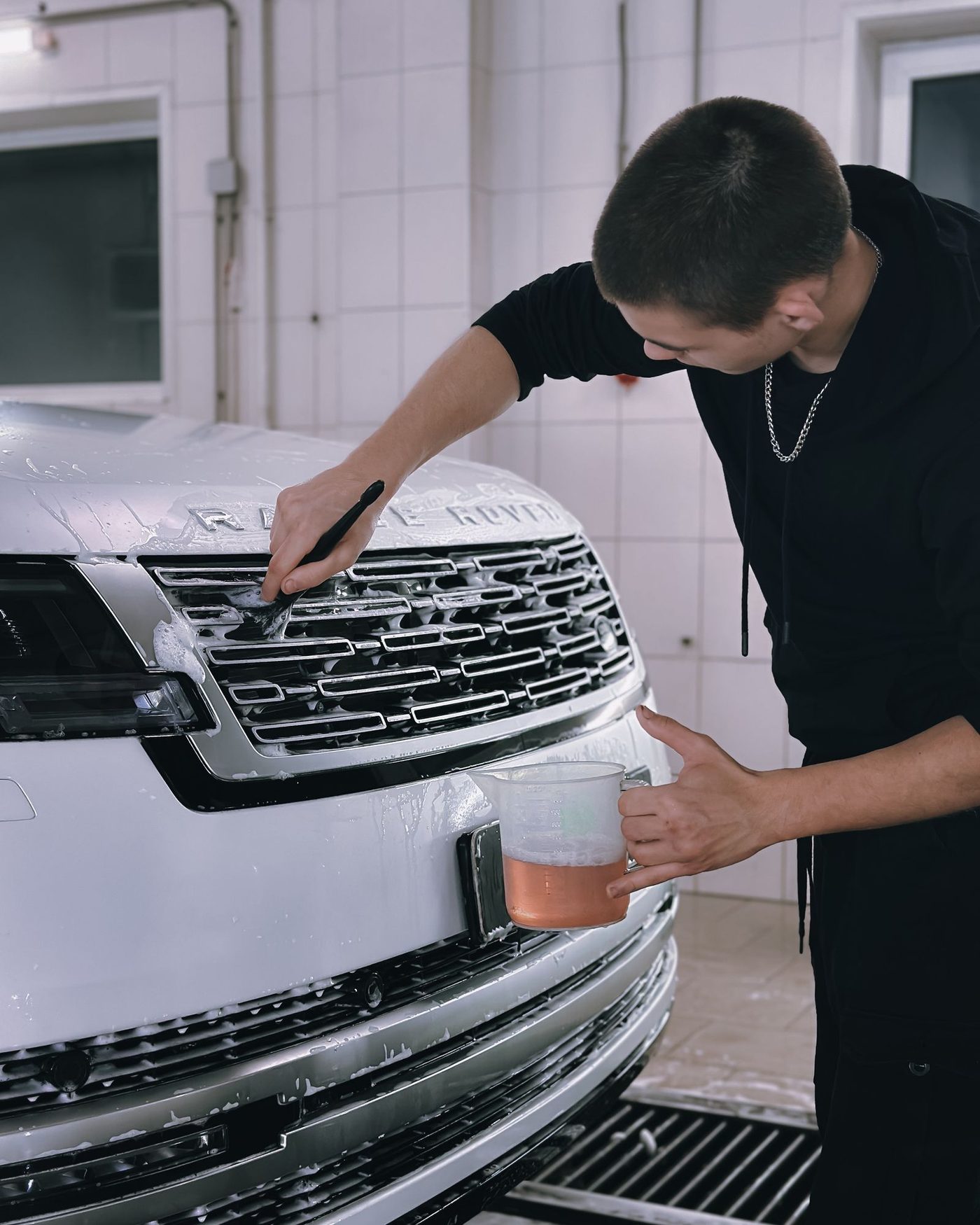
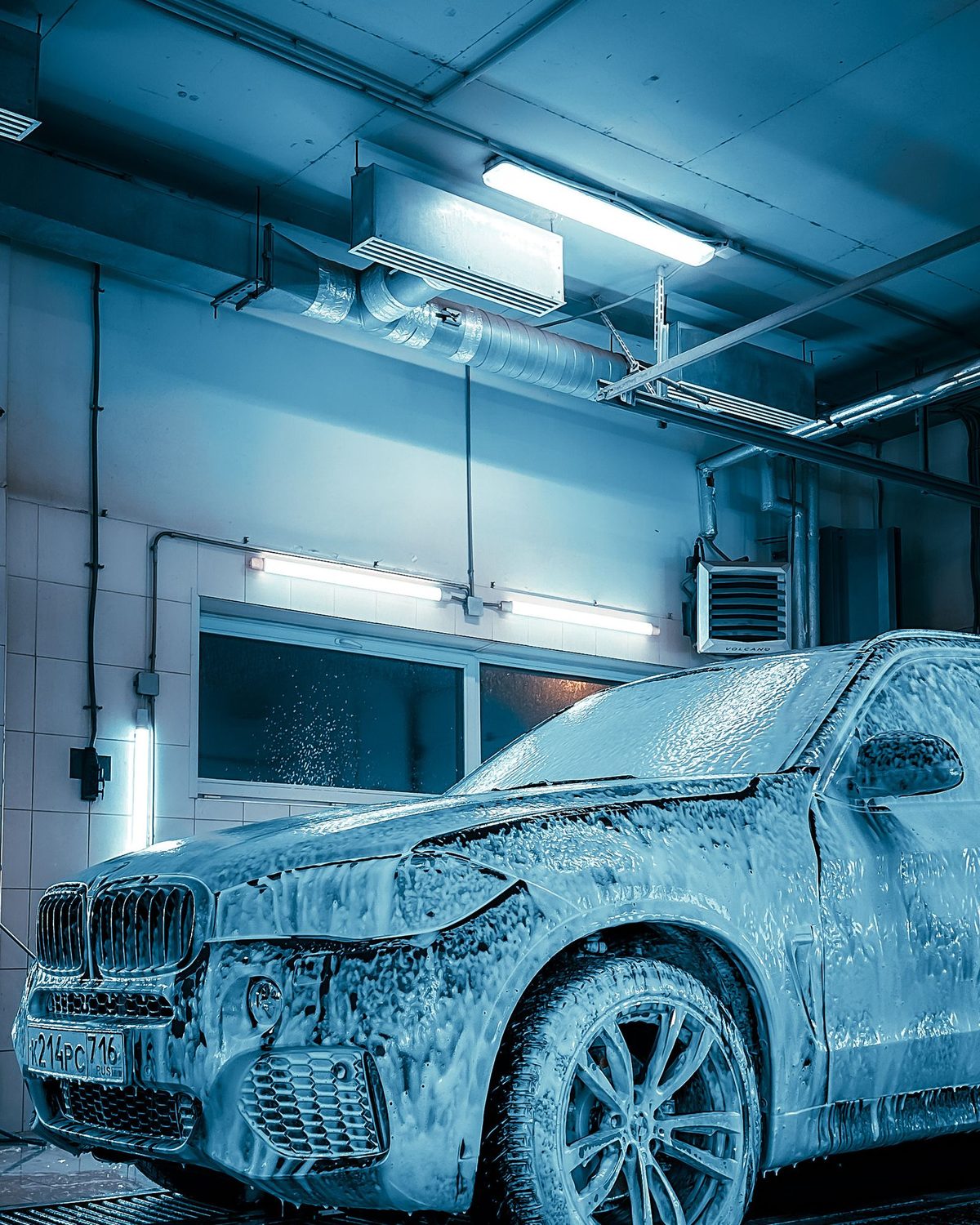
The paint is pre-washed with foam to lift grit before anything touches it, then hand-washed with the two-bucket method. Iron fallout and tar are dissolved chemically, and a clay bar pulls out whatever is still bonded to the clear coat. Wheels come off their faces and barrels are degreased, tires and wheel wells are cleaned, trim is restored, glass is polished, and the paint is sealed. The surface should feel like glass under a fingertip when it is done.
Interior detailing
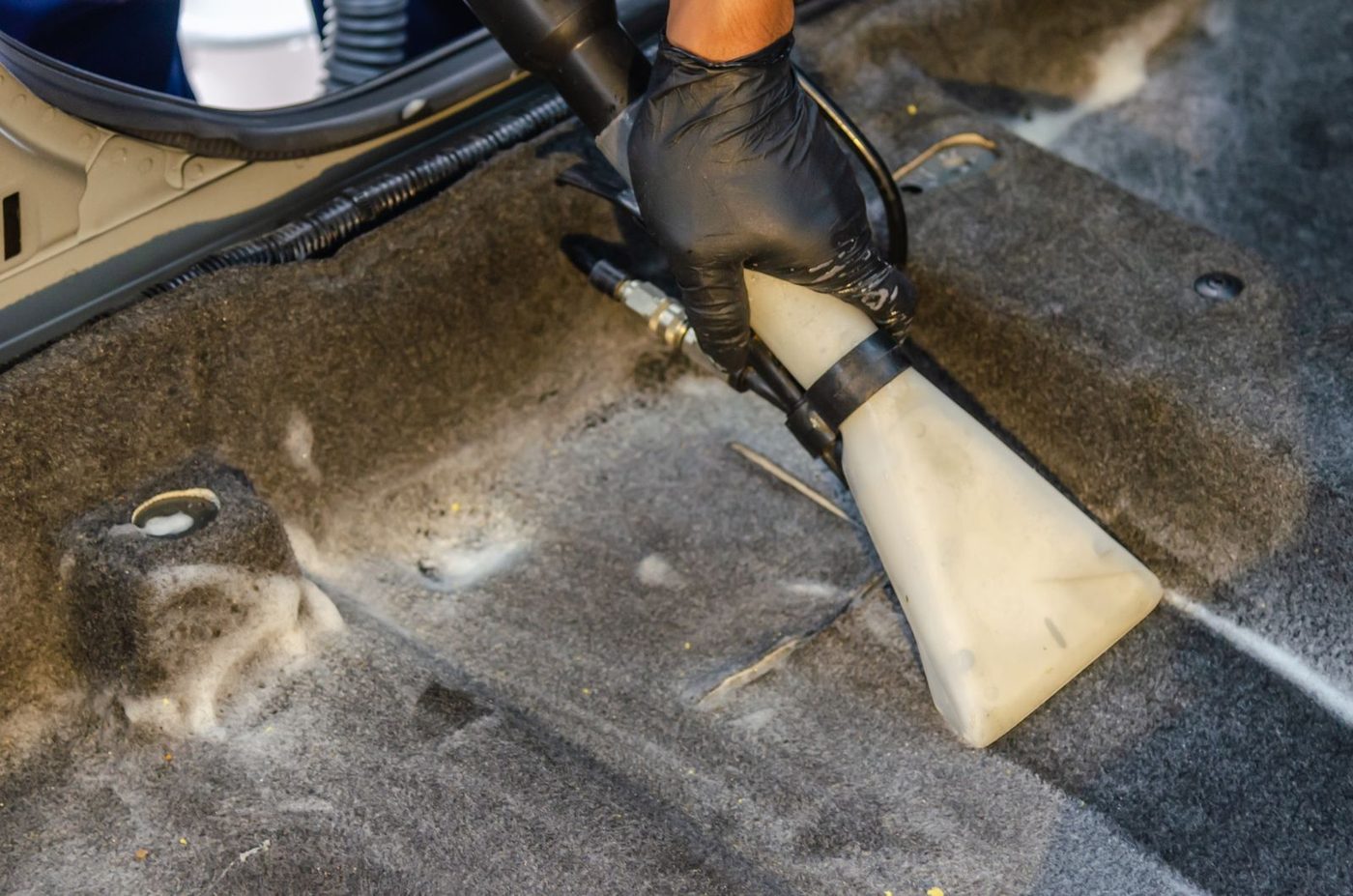
Everything removable comes out. Carpets and fabric are steamed and hot-water extracted, not just vacuumed. Leather is cleaned with the right pH, then conditioned. Vents, seams, switchgear, door jambs, seat rails and the spaces between the seats and the console are cleaned by hand with brushes. Glass is finished streak-free, plastics are dressed with a matte finish, and the cabin is deodorized at the source rather than perfumed. The test is simple: it should smell of nothing.
Paint correction
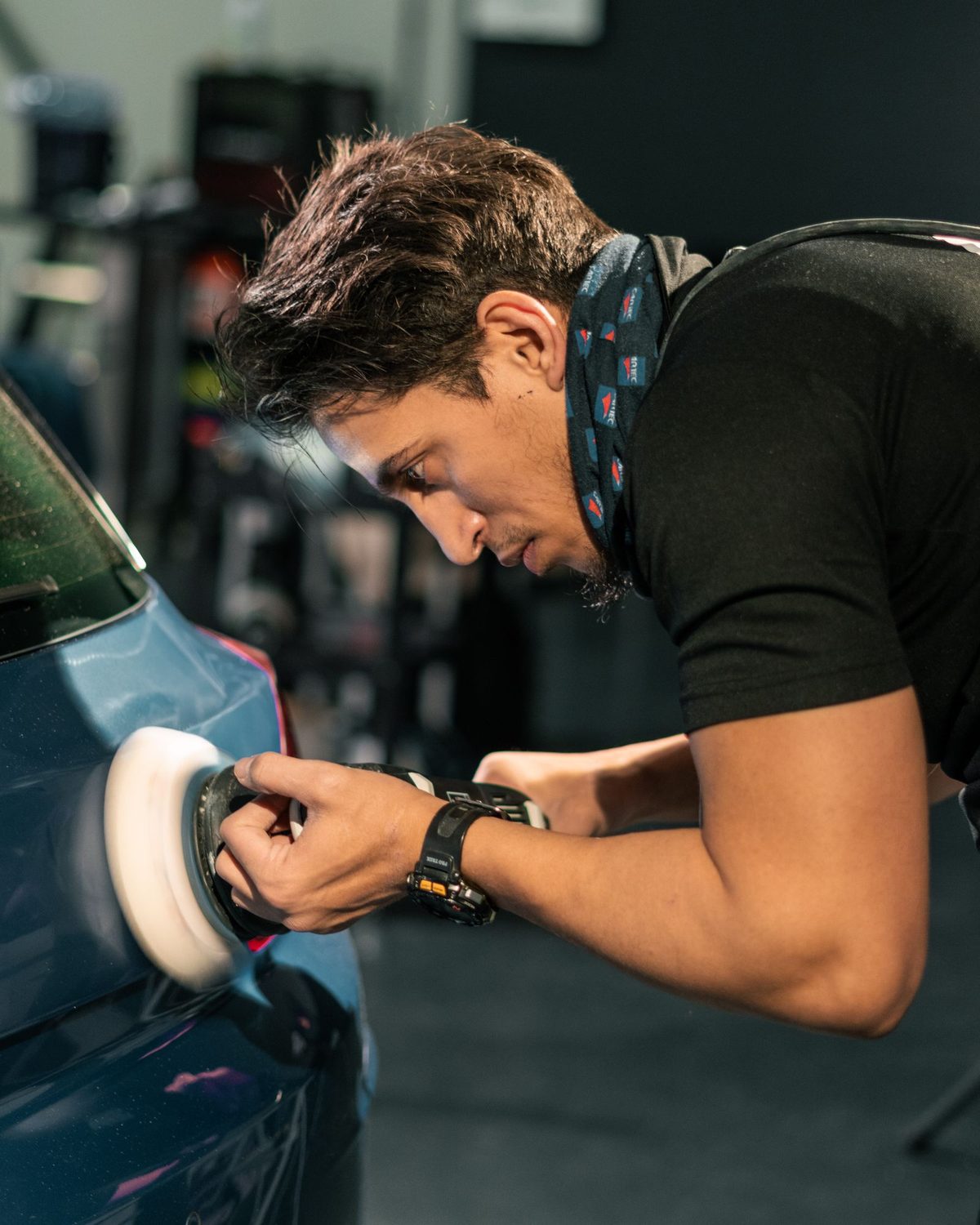
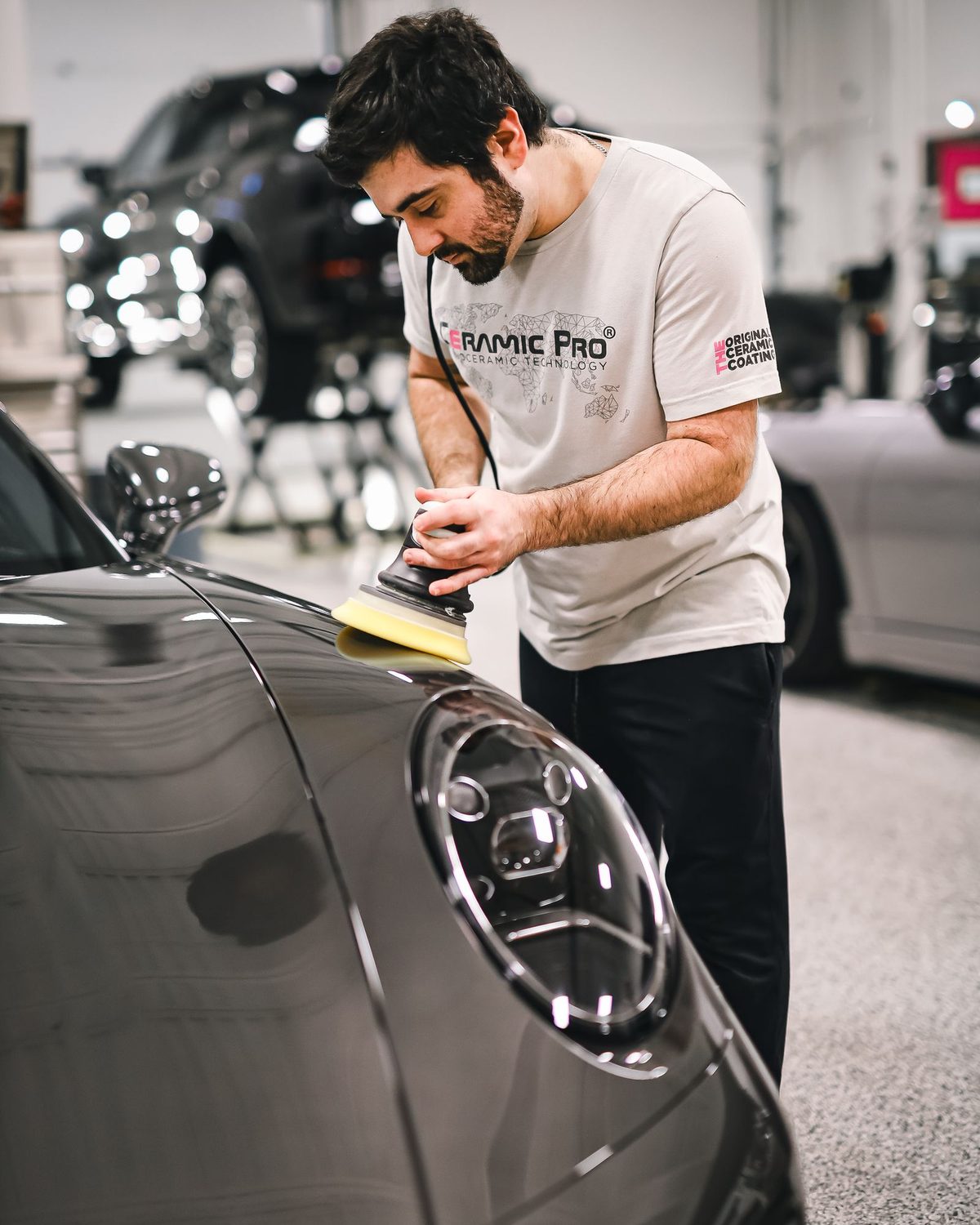
Swirl marks, fine scratches, water-spot etching and oxidation all live in the top layer of clear coat. Correction uses a machine polisher, graded compounds and pads to level that layer by a few microns until the defects are gone. The paint is measured with a thickness gauge first so nothing is taken that cannot be spared. A one-step polish restores gloss and removes light swirls; a two-step correction removes the majority of defects; a multi-stage correction is show-car work. It is the single biggest visual difference a detailer can make to a car. A scratch that is through the clear coat cannot be polished out; that is body work, and here it is handled on the other side of the shop.
Ceramic coating
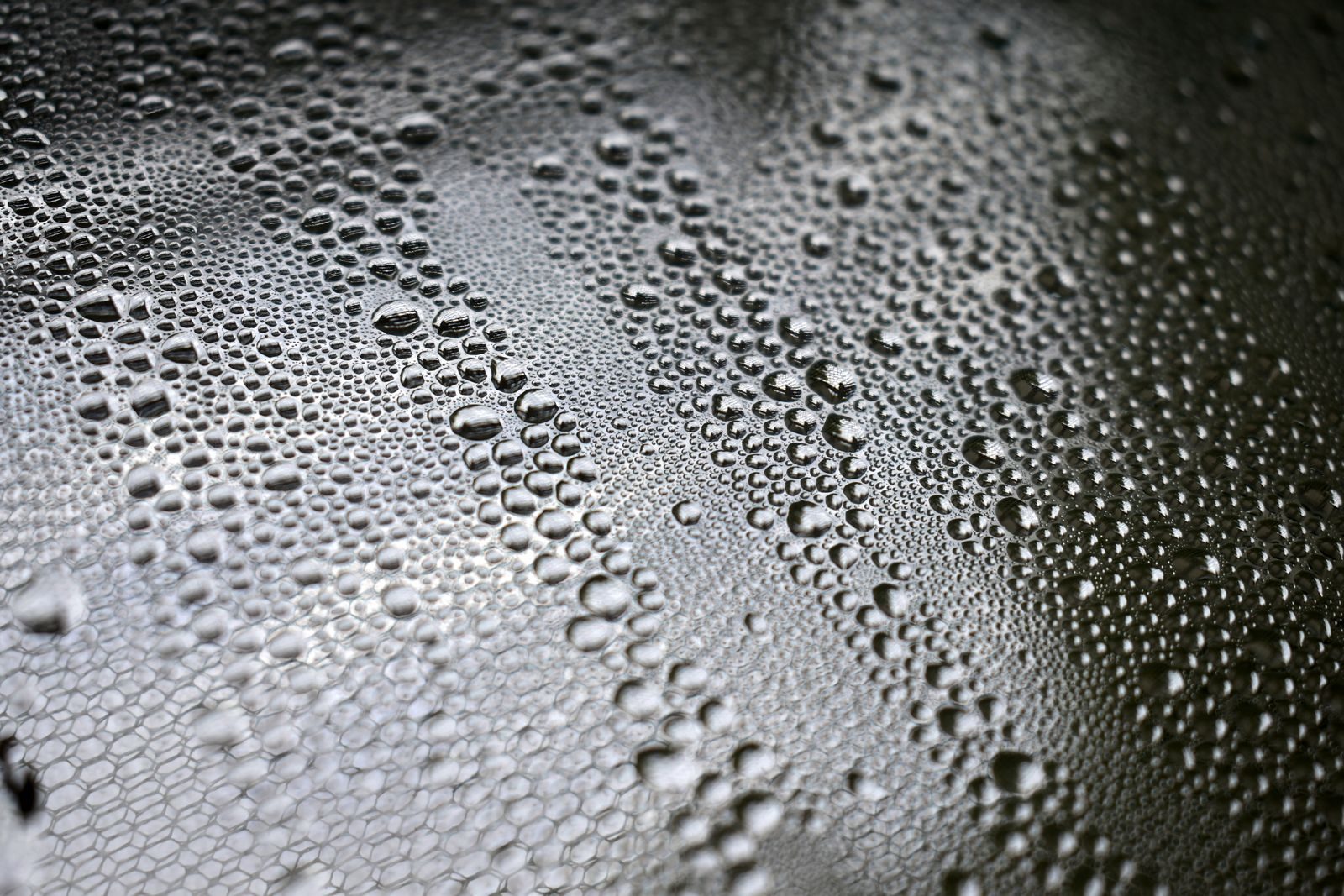
A professional ceramic coating is a liquid silica-based polymer that bonds to the clear coat and cures into a hard, glossy, chemically resistant layer. It is not a wax. It resists UV fading, bird droppings, salt air and light chemical attack, makes water bead and sheet off, and means dirt does not grip the surface. The coating is only ever as good as the paint underneath, which is why 684 Detailing's Ultimate Protection stage corrects the paint where it needs it first, applies the coating in a controlled space, and lets it cure properly before it sees weather. You leave with a care guide so it keeps performing.
A sensible rhythm at the beach.
Salt air, sun and sand are harder on a car than most climates. This is the schedule we recommend for a vehicle kept in Sussex County.
Correct and coat
When the car is new, or the first time it is properly detailed. This sets the baseline everything else maintains.
Maintenance wash
A proper hand wash with coating-safe products. Fifteen minutes of your time if the car is coated and you do it yourself; the Express Clean on the menu is exactly this, done for you.
Interior detail
Spring, after a winter of salt and wet shoes, and fall, after a summer of sand and sunscreen.
Coating inspection
Decontaminate, check the coating, top it up where it needs it. Keeps the coating performing for as long as it is meant to.
Words you will hear.
Clear coat
The transparent top layer of modern paint. It carries the gloss and takes all the damage. Correction works in this layer, and coatings bond to it.
Swirl marks
The web of fine circular scratches you see in sunlight on a dark car. Almost always caused by washing with dirty tools or automatic brushes. Removed by polishing, prevented by proper washing.
Decontamination
Removing what is bonded to the paint rather than sitting on it: iron fallout from brake dust, tar, tree sap, industrial fallout and old wax. Done with chemicals first, then a clay bar.
One-step, two-step, multi-stage
How many passes of machine polishing the paint gets. One step with a finishing polish restores gloss and takes out light swirls. Two steps add a heavier compound first to remove deeper defects. Multi-stage is for show cars and badly neglected paint, and can include wet sanding.
Paint thickness gauge
A meter that reads how much paint is on a panel in microns. It tells a detailer where previous bodywork is, and how much clear coat can safely be polished. If your detailer does not own one, they are guessing.
Sealant vs wax vs ceramic
Wax is natural, looks warm, and lasts weeks. A synthetic sealant lasts months. A ceramic coating cures into a hard layer that lasts years and needs professional preparation to apply properly.
Hydrophobic
Water-repelling. Coated paint makes water bead into tight drops and roll off, which is the visible sign the protection is working.
Extraction
Hot-water extraction pushes cleaning solution into carpet or fabric and immediately vacuums it back out, pulling the dirt with it. It is how a stained seat is actually cleaned rather than just made to look cleaner.
Odor elimination
Removing the source of a smell (smoke, pets, mildew) with cleaning and an ozone or chlorine dioxide treatment that reaches into fabric and vents, rather than masking it with fragrance.
PPF
Paint protection film: a clear, self-healing urethane film applied to high-impact areas such as the front bumper and hood to stop rock chips. It protects against impacts the way a coating protects against chemicals and UV. 684 Detailing can advise on film and refer you to an installer.